
José María Sicilia
El final del cuento
Prats Nogueras Blanchard, MadridSep 12 - Nov 8, 2024
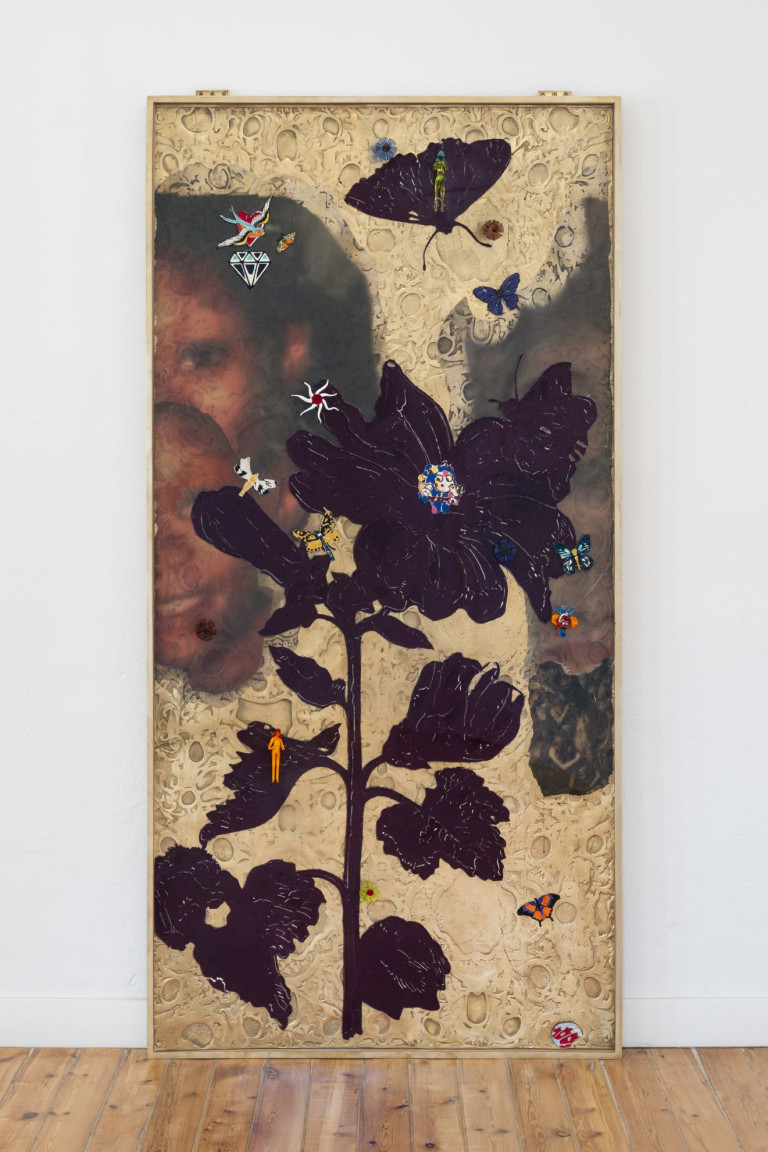
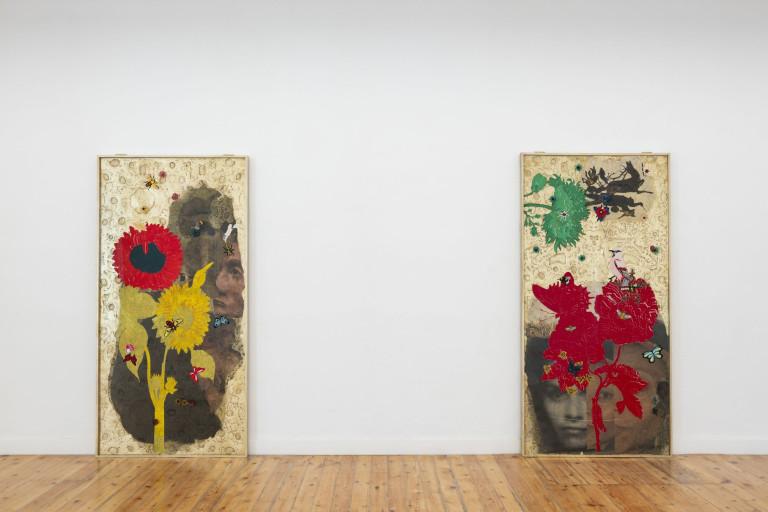
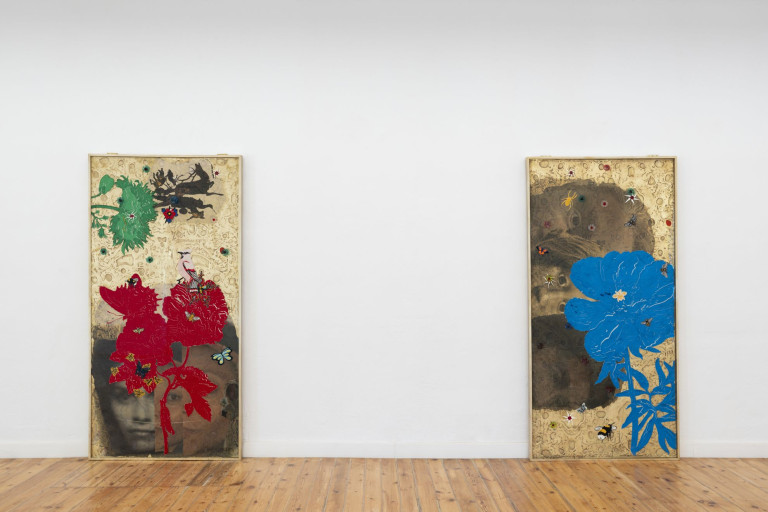
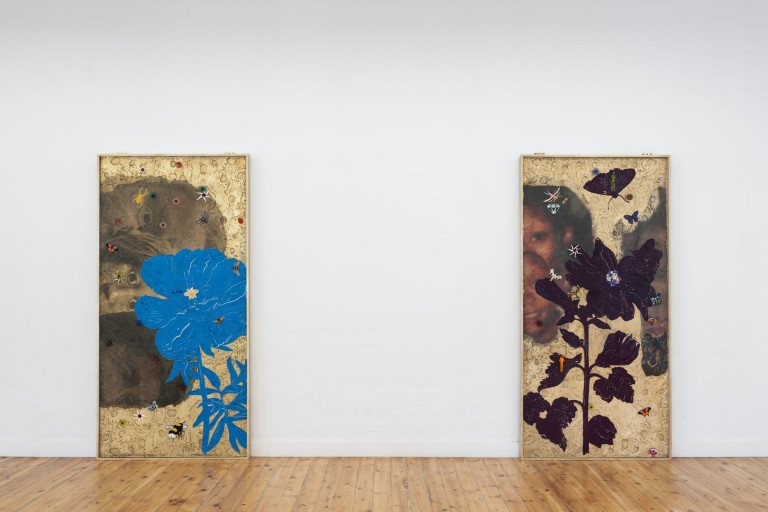
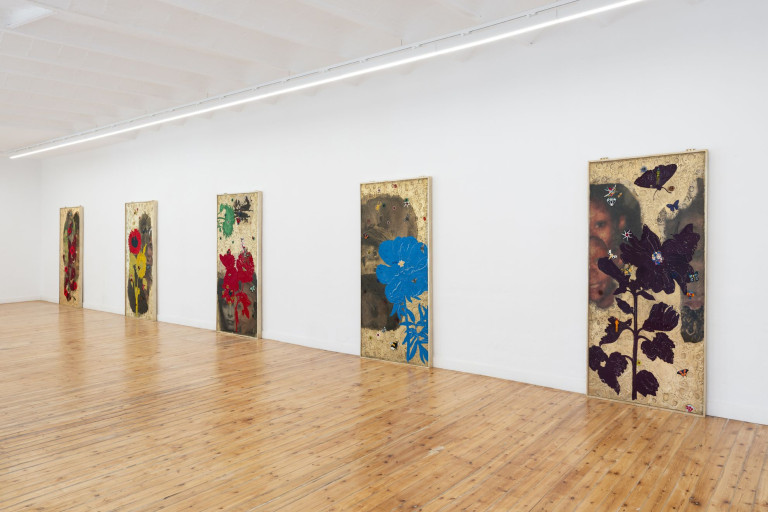
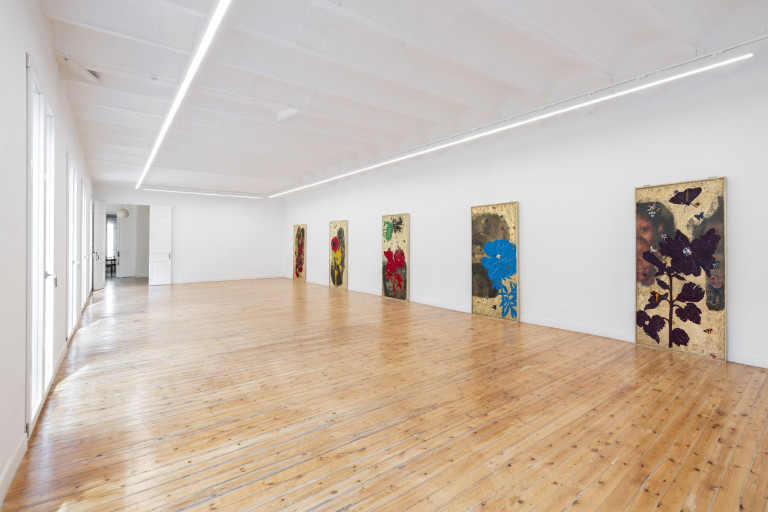
Prats Nogueras Blanchard is pleased to present El final del cuento [The end of the story], a solo exhibition by José María Sicilia (Madrid, 1954) on the occasion of Apertura Madrid Gallery Weekend. This exhibition brings together works made between 2023 and 2024 using brass, embroidery, Japanese paper, oil and Murano glass.
El final del cuento [The end of the story]
You will see that all this will end with stories of money, of death
silly questions that fill the air
I
Is this September
The one that exhales life so it keeps growing older?
You told me nothing until today, the 13th
Nothing about pain and payments
It is possible that misfortunes were sent to us to be told
Thy will be done
Which is to say, your resentment
Spirit of vengeance
So we go
II
You are seeing what I live on
In a country that is pulling down the shutters
What a coincidence to find you here
Looking at these reflections that turn their backs on us
What one can no longer take
Nor use profitably
Is this the sad shadow?
And is that the celestial light?
Which one?
The one that lights up
When we wish to repair a spider’s web
With our fingers
How can a body have a soul?
III
The place of a married painter is comedy
How to reach the truth when you are fooling yourself
With another
In this situation what is happening to you
Has not yet happened
The carrots are cooked
I repeat the carrots are cooked
Look at them
Turning into words
And the goat on the bare tree
Eating the last leaves
Life beating in them
IV
In the bar No Puedo
Avoid Love
That Man of Mine
makes marks on the paper
he feels he has a form of consciousness
Invulnerable
-alone and naked
four legs approached the car blinding them
an octopus
a box of lives
there were ripe grapes
palpitations
coughing
11 February 2022
he went to a street further ahead, called Cereza, shot the head with a 9 mm weapon, grabbed the car keys, wallet, shirt.
he ate grapes like a fox
what is this my guest?
can a stew die?
kill something
almost headless
some time later I saw two cars—one of them the couple’s—empty. I heard what sounded like a gunshot, but I was not sure having the radio on.
they also appeared in positions the newspapers considered artistic
minutes of first aid
the arm tied to the car on the grass—
V
The devil and his gifts
I know what I want what you want oh come on! you follow me everywhere with the boomerang give me a kiss bastard
Whim
She is herself
Blood hold your place
Blood hold yourself
It is raining
The rain what nonsense
Pennies from heaven
It is a retreat, a disappearance
A portrait
She does nothing
Watches the window listens
Listen sister
I love my man and I can’t say why
One sip of gin
And she is happy
Nothing
The roof leaks she doesn’t care
She says nothing
Heaven, I’m in heaven
Though it bites make her like me
Her fire lip, take it
Boy’s boomerang, take it
Water penis, take it
Rainbow, take it
Lightning, put it on
There she is
Blood hold your place
Blood hold yourself
A swallow doesn’t make spring
I repeat a swallow doesn’t make spring
—The roses in the hands of a madman
Who makes his way to a house that makes a loud cackling sound
With papers and coloured pencils
He will make you a portrait
Leave
He is already here
The rosebush loaded
The birds
Always
He had music
He made me laugh
She was the clown
VI
We had a famous painter of natural scenes that man must have painted 1000 km² of canvas not a single human face and I wish he had been here to paint that girl hanging so decoratively against the mountains with her pink tongue and her white face he would have made the green of the mountains blossom
She and he
Mark the passage of time
With a cheerful walk
In a cuckoo clock bar
The same movements again and again
Inviting that which resists being pronounced
Language and death sealed a pact
Tic tic
Tic
Beautiful fall
If you rhyme
In silence
Under the veil
the dark verses
Tic tic
-The talking bird
was pecking at the split tree
it did not speak
the seagull god
crossed the sea
his face was leaving
he took it out
he put it back in
he began to bend over his knees
you shouldn’t have come
are you alive?
the cat burning rockets
we are poor
I was surprised that the bird told me
are you alive?
you
the rock sugar crown
that fell into the water
life turned soft.
the giants grew
in the cave of the lashing waves
green yellow flowers opened their tentacles
VII
What do you think of when you speak?
colours words stuck you say it’s something and I don’t see it that it’s art amuses me a little and bores me a lot what’s the need to show it for it to be seen if it’s unseen if what you’re pointing at is art what do you want me to do about it?
Give it in the eyes
Give it right in the eyes
We are alone, that’s what’s exciting
-MH17
20F
3 March 2022
so it saves time and work
god
hitting his snout
his wings with a pestle
he grabs him with both hands
the neck until it shells
releases the seed
breaks the cry
that drives in a wheel
pure pearl
do not suffer from absence
one single moment
THE END OF THE STORY
So the narrator begins to narrate and the first thing he narrates is the suspension of time. In illo tempore. Or il y avait autrefois. Or once upon a time. With or without formula, every narrator operates a suspension of time.
Once upon a time, Saint Louis en l’Île, Paris 1992, where I began to work in Michael Woolworth’s studio on the originals of the Thousand and One Nights, translation by Mardrus, Le Livre des mille nuits et une nuit, 16 volumes. Ed. de la Revue blanche puis Fasquelle. 1899-1903. My intervention through Michael’s press did not illustrate the content of the nights, my intention was to add one more night, my own. I think we did the fourth volume of six in 2014, in 2022 I decided to resume it, at the end of 2023 I started what I thought would be the end, that is The End of the Story. I started it without finishing the other parts, The Libraries of Metamorphosis and of The Lost, Engels and my Family, Ghosts and Suicides 2011-2019, Final Year or Goal if you prefer, etc., yes, I was in a hurry, how much time is left?
The End of the Story illustrates what for me is the first night of The Thousand and One Nights, a night of blood.
EVERY MAN FOR HIMSELF
Fear is always available, the question is who uses it, truth and reality have become unspeakable
Are you there?—he whispered—Will I see you at last?
Do you have a neck to strangle yourself with?
Keep in mind that the things you put in your head are there forever,
You forget what you want to remember and remember what you want to forget.
We enter the darkness
The continuation is even more surprising, if you let me live I’ll tell it to you next night
And he said to himself: I will wait until tomorrow and kill her when I have heard the end of the story.
HEADS
Giacometti, talking about heads, heads that paraded and remained before him “joined by an inner point that looks at us through the eyes,” said that they had “no definable colour.”
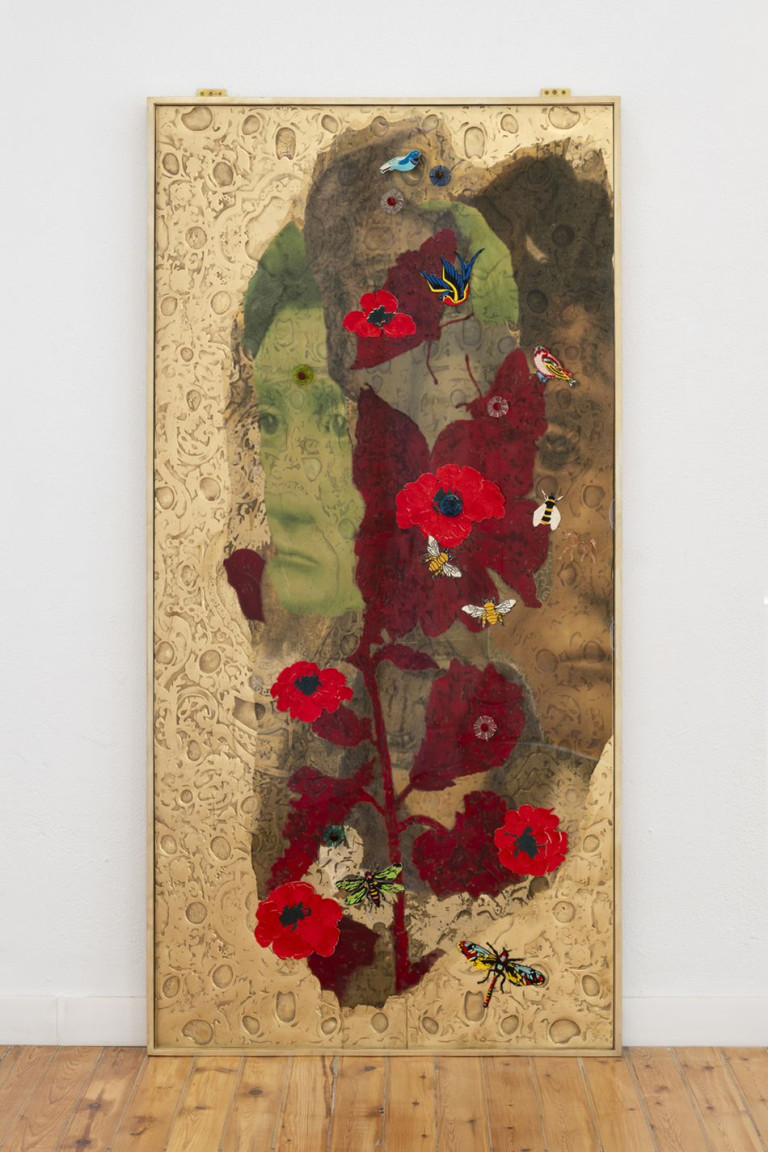
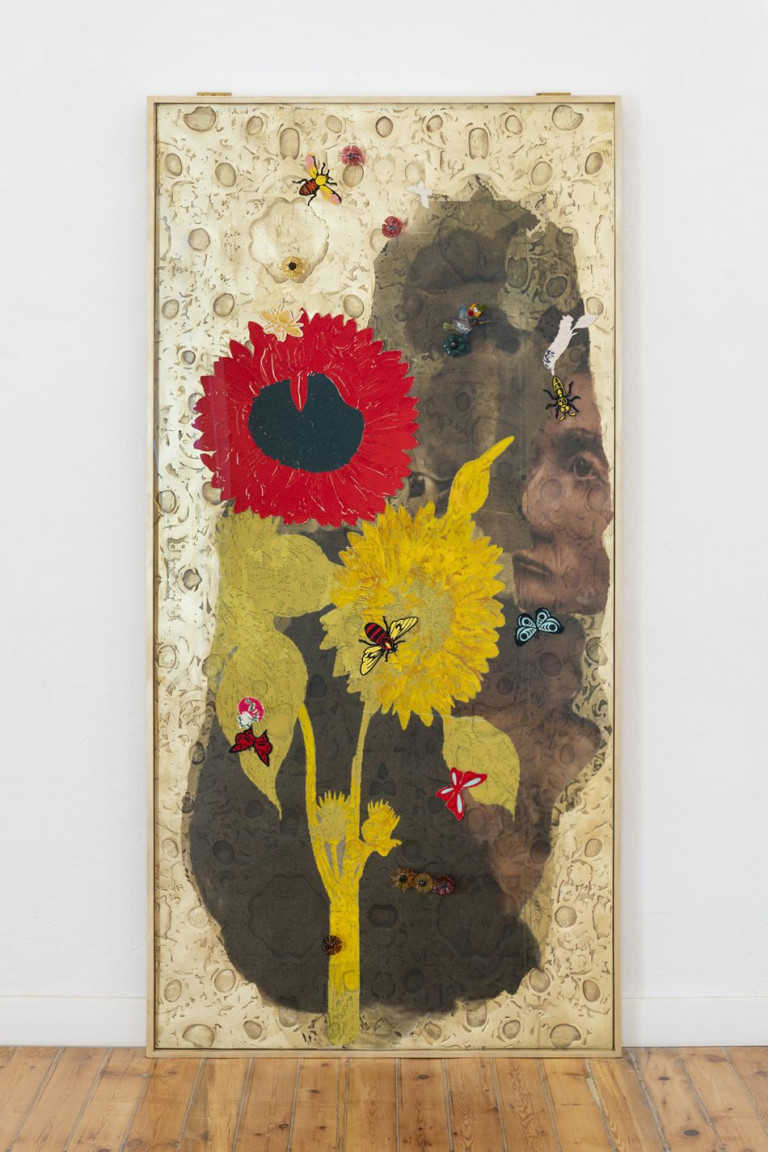
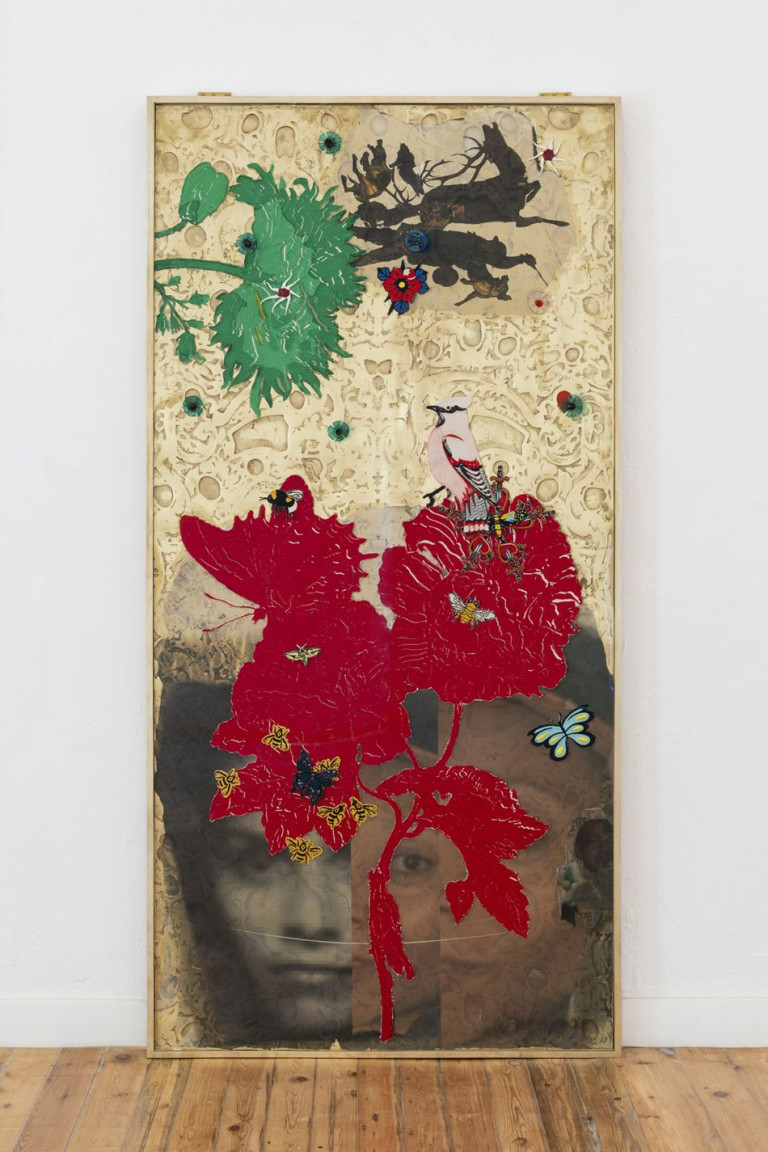
These heads, like those of El Fayum, of imperceptible colour between the matte and the shiny that surrounds it, the green, ochre, red and the ghostly violet blues of the glass, shoddy Murano memories, want to remain and resist, looking at us from an eternal present.
It seems as if it were proper for heads to paint all the fantasies that are shown, AI insects, flowers that are quickly erased and disappear from the mind; but the support where the images one loves reside is made in the fire, they shine on the brass leaving in our memory shapes that move, that live, speak and remain forever.
Sometimes there are two or more heads in clay that seem to have been made separately and then glued together, like in the canvases painted in the funfair stalls of yesteryear where, in a hole made in the right place, the customer could insert their head.
But even so, dreaming is allowed. Beyond the fact that we almost know to whom each face belongs, hands write, names sign receipts, contracts, and beyond the names that lack a face, faces close to these names reach us.
The portrait is the name of the face.
RETURNING TO THE UNLIMITED
They reach out to us, they speak to us silently; once, death was considered a kind of arrival. They are here to stay. Sometimes I think some of them have just weighed their souls and are asking us with their eyes, “And now what? Shall we eat?” The black paw of the dog is already upon them, a threat that paradoxically protects them.
They are the living dead of every day, fixed, questioning, without affections, without desire. In them, there is a kind of placidity, a neutrality. They do not speak, they are silent. When death harasses you, make a portrait of yourself for death, in its maximum tension, without pathos.
What dies has not been discarded or erased; it returns to being and continues within it.
THE NARRATIVE
To narrate is to foster duration; to endure beyond time in a time without time; to spin the thread of memory, which is the same as following the thread of the narrative. To lose the thread of the narrative is equivalent to cutting the thread of memory. And that is death. Memory and immortality are the same. The dead are those who have lost memory. The one who holds the thread of the narrative or memory does not die.
THE LAST POEM
I will make a portrait of myself
At the end of the tale
I dissolve
In favour of a light
At the end of the tale
I simply contemplate
My hesitation
Ends here
Where I am born
At the end of the tale
WHAT WAS SAID
The clarity they have about certain things after all this time is frightening. They remember names and faces. The sale of a "mouse-coloured" Cadillac.
The lease agreement of Melissa Thomas, aged 24, whose naked body was found in 1996 in a cemetery in Opelousas, Louisiana.
To Detective LeBlanc, he said: "God made me this way; so why should I ask for forgiveness?"
I’m sending you a portrait of myself through DHL.
The letter from a student asking his father to come and see him (“this is the fifth time I’ve written to you”).
"God knew everything he was doing," he added.
Take the gold jewellery with you, do not send it via DHL.
A list of Murano trinkets for the family.
Four thousand daffodils and a thousand roses that they managed to get from a seller of embroidered flowers. In any case, this shipment never arrived.
His drawings include details like the colour of the victims' eyes and hair or the blue scarf that one of them was wearing when she was kidnapped.
Being and leaving are one and the same thing. The greedy lack a grave.
Contracts, promises, threats.
THE PAINTER'S GAZE
It’s obvious that in his criminal wandering he didn’t have a fixed studio; he didn’t want to attract an audience. He painted in oils, overcoming the limitations of tempera, which is dry and not very malleable. He bought cheap materials at Love's Travel Stops & Country Stores that he found during his wanderings. Sometimes he made his own oil paint crudely, resulting in those pigment-saturated, very matte brushstrokes.
Our painter was indifferent to his surroundings. The sizes of his boards were the most suitable for moving with them. Tables and chairs from the roadside motels where he stayed served as his easel. With few resources, he managed to express the emotions his models evoked in him. We assume that all the portraits he left were done from memory. He replicated the qualities of skin and clothing, colour and texture not by imitation with small brushstrokes, but in a convincing manner, suggesting their appearance and the sensation they produced when light struck them. He layered brushstrokes—loose and quick strokes that allowed the previous work to breathe. He knew his materials well.
The painter left us a small notebook where he noted material expenses, tubes of oil paint, pigments, oils, and resins. In the notebook, there were also notes about food from restaurant chains such as Arby’s, Baskin Robbins, Bojangles, Burger King, Chester’s, Dairy Queen, Del Taco, Dunkin’, Friendly’s, Godfather’s Pizza, Green Burrito, McDonald’s, Taco John’s, Subway, Taco Bell.
What he saw, how he saw it, and the time he could dedicate to each work undoubtedly conditioned the repertoire of brushstrokes and graphic strokes. He was versatile, never systematic. We suppose that despite the agitation he must have felt, his working methods were stable and consistent. He never used pencil sketches; he said he painted what a voice dictated to him. He never had the models in front of him long enough to do the portrait. He had a prodigious memory, as he reproduced a believable image of the victim.
Regarding the compositions, the casual and transitory aspect of most of the poses stands out; they seem to be captured in the middle of everyday actions, sometimes even appearing rushed. Rushed for what? Perhaps he used this resource to give more liveliness and authenticity to the portrait. Many times we observe expressions of surprise in the portraits, I would even say of astonishment. Sometimes the portraits are not in the centre of the board, adopting unstable positions reminiscent of 17th-century Dutch still lifes, see Paul Claudel, this happens when the portrait has a landscape format. In general, the portraits are frontal, some three-quarters; there are no hands or shadows of the head on a background, nor shadows of the body on itself.
Many times he did not blend the glazes; this is where he reached excellence—it could be said that an embroidery machine executed it. Continuous, zigzagging, broken lines, always confident. With this technique, he created underlying layers that he finished with other strokes to give light and texture.
The use of different oils and driers suggests that the boards were worked on in different places, meaning he even travelled with wet boards. As he got older, he layered the paintings more, to the point where the portraits developed pronounced reliefs.
His gaze did not distinguish between light and shadow; he never modelled the faces. He well captured the hesitant nature of his models. The constant fluctuations in his personal life are reflected in the portraits; the flesh is murky, the visible world unstable.
I think he would have liked working with oil on rough surfaces so that the colour transitions were smooth, in the manner of Titian, or perhaps in his portraits, he might have softened the contours so that the portraits would dissolve into their own outline like Giorgione. He continually tried to represent flesh so that it seemed alive, even though he knew they were dead.
— José María Sicilia
Installation
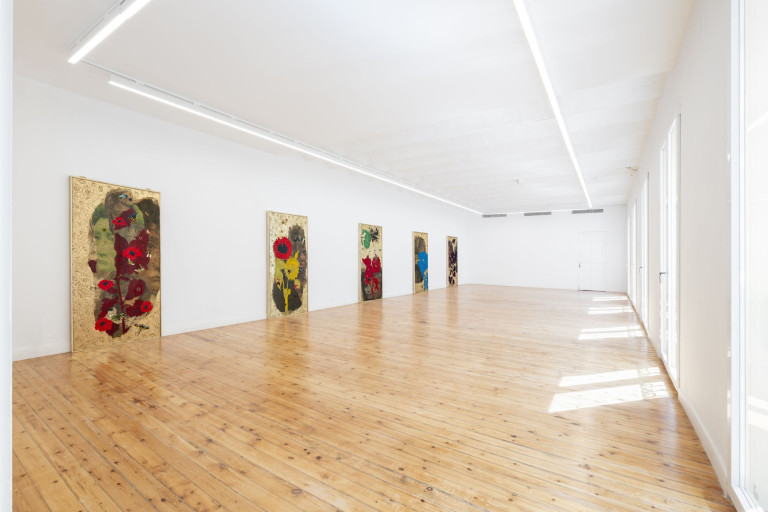
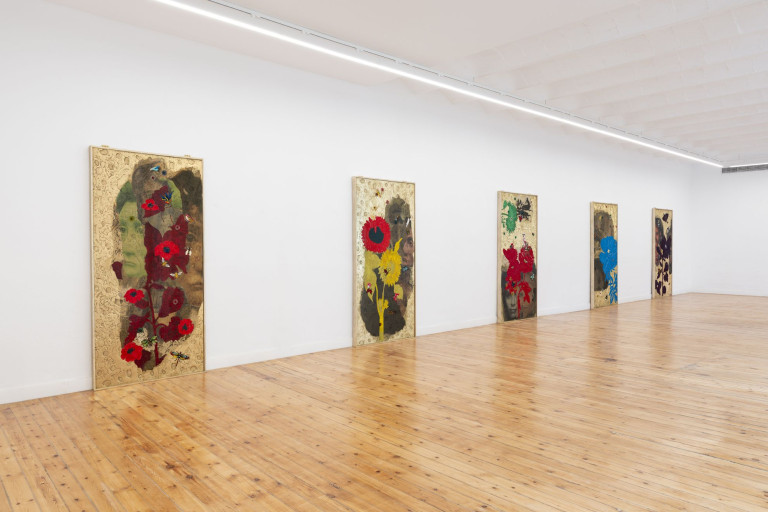
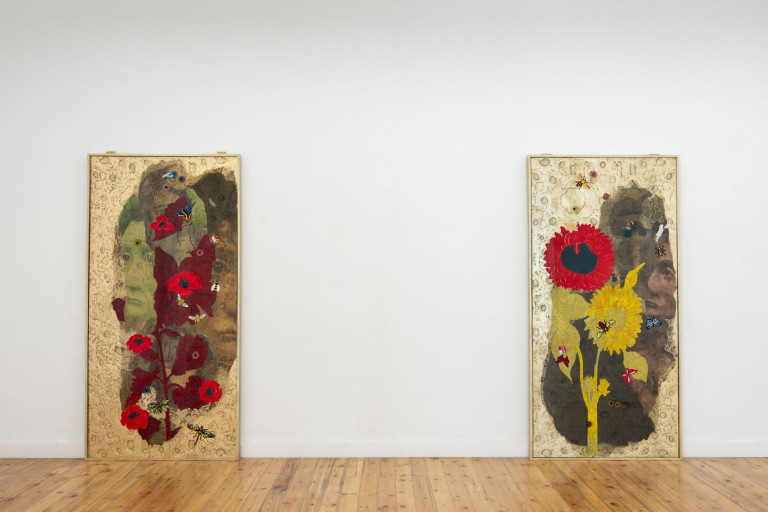
Selected Works
José María Sicilia
El final del cuento II
2024
Brass, methacrylate, paper, silk, Murano glass, oil
200 x 96 cm (78 3⁄4 x 37 13⁄16 inches)
José María Sicilia
El final del cuento III
2024
Brass, methacrylate, paper, silk, Murano glass, oil
200 x 96 cm (78 3⁄4 x 37 13⁄16 inches)
José María Sicilia
El final del cuento IV
2024
Brass, methacrylate, paper, silk, Murano glass, oil
200 x 96 cm (78 3⁄4 x 37 13⁄16 inches)
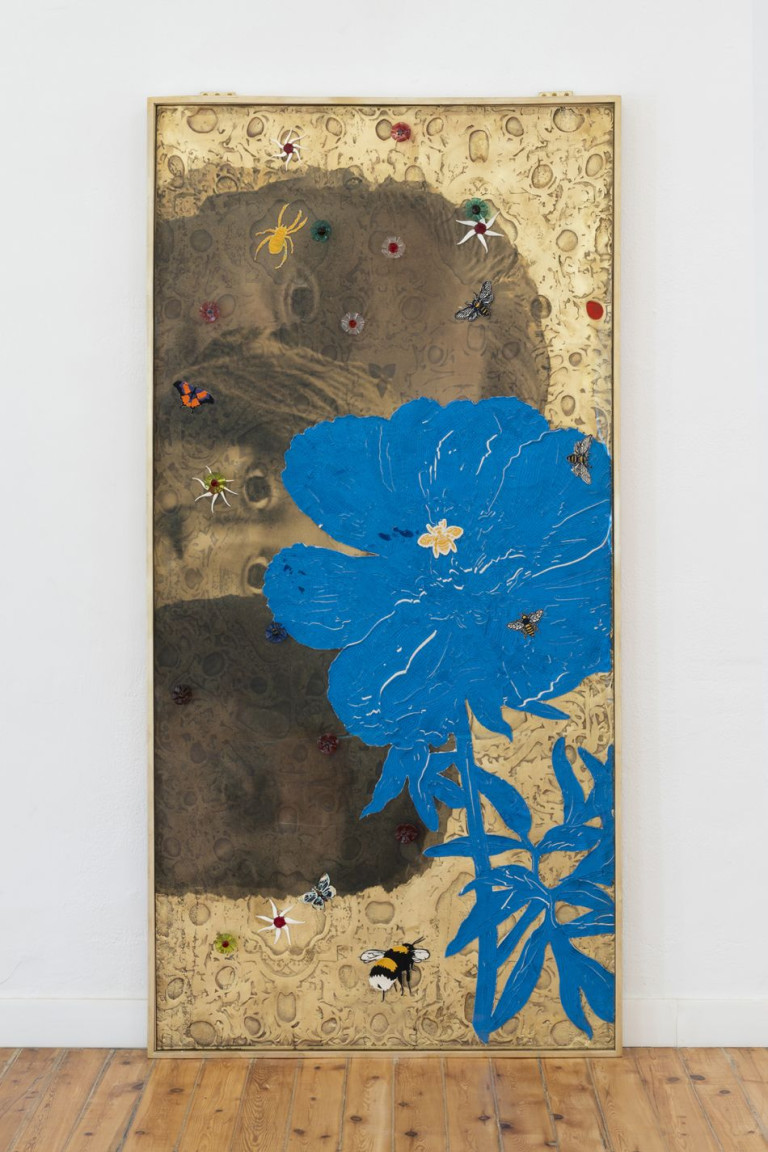
José María Sicilia
El final del cuento V
2024
Brass, methacrylate, paper, silk, Murano glass, oil
200 x 96 cm (78 3⁄4 x 37 13⁄16 inches)
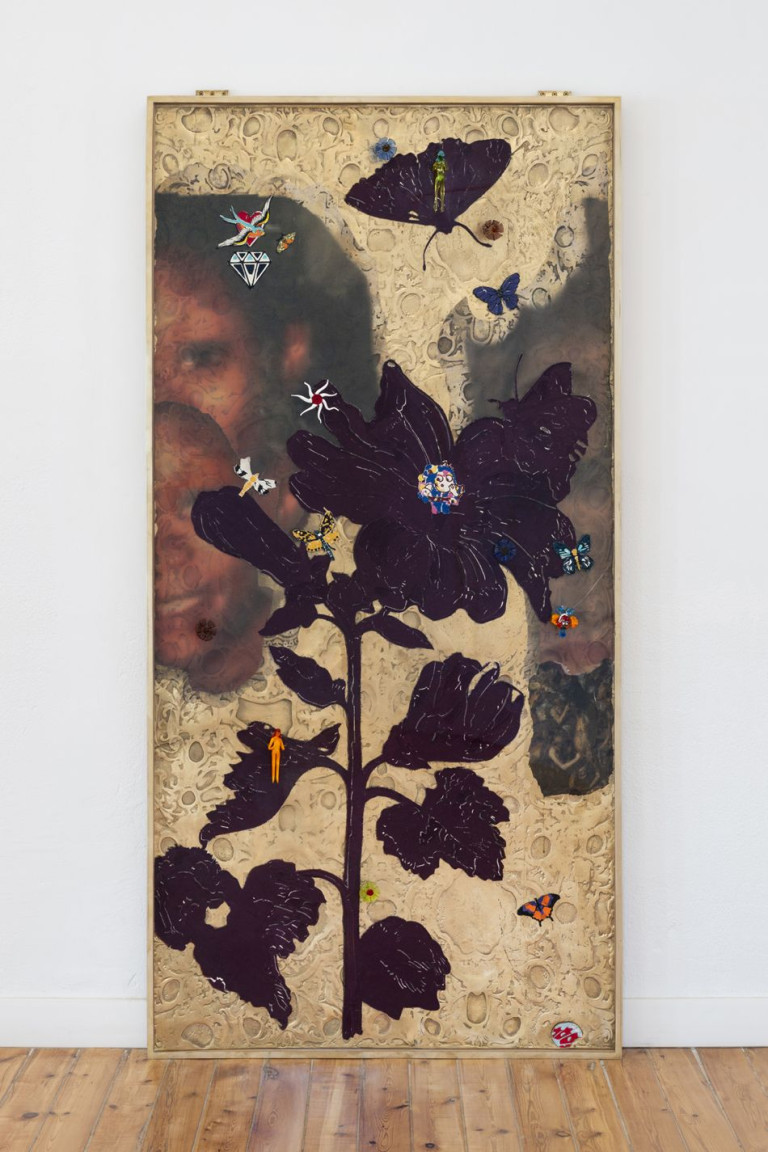
José María Sicilia
El final del cuento VI
2024
Brass, methacrylate, paper, silk, Murano glass, oil
200 x 96 cm (78 3⁄4 x 37 13⁄16 inches)