Ignacio Uriarte
Dos rectángulos y un círculo, 2018Pigmented ink on paper
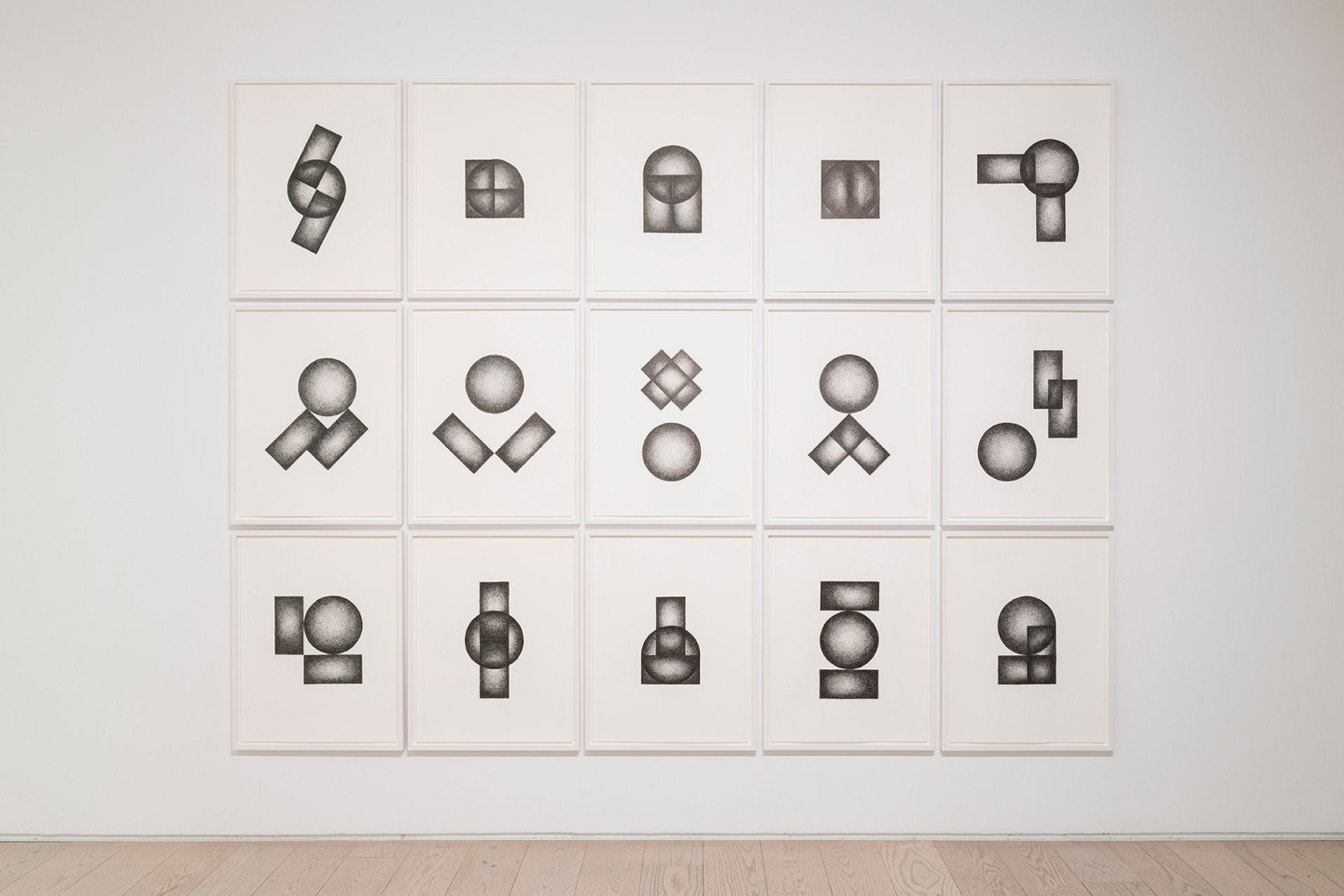
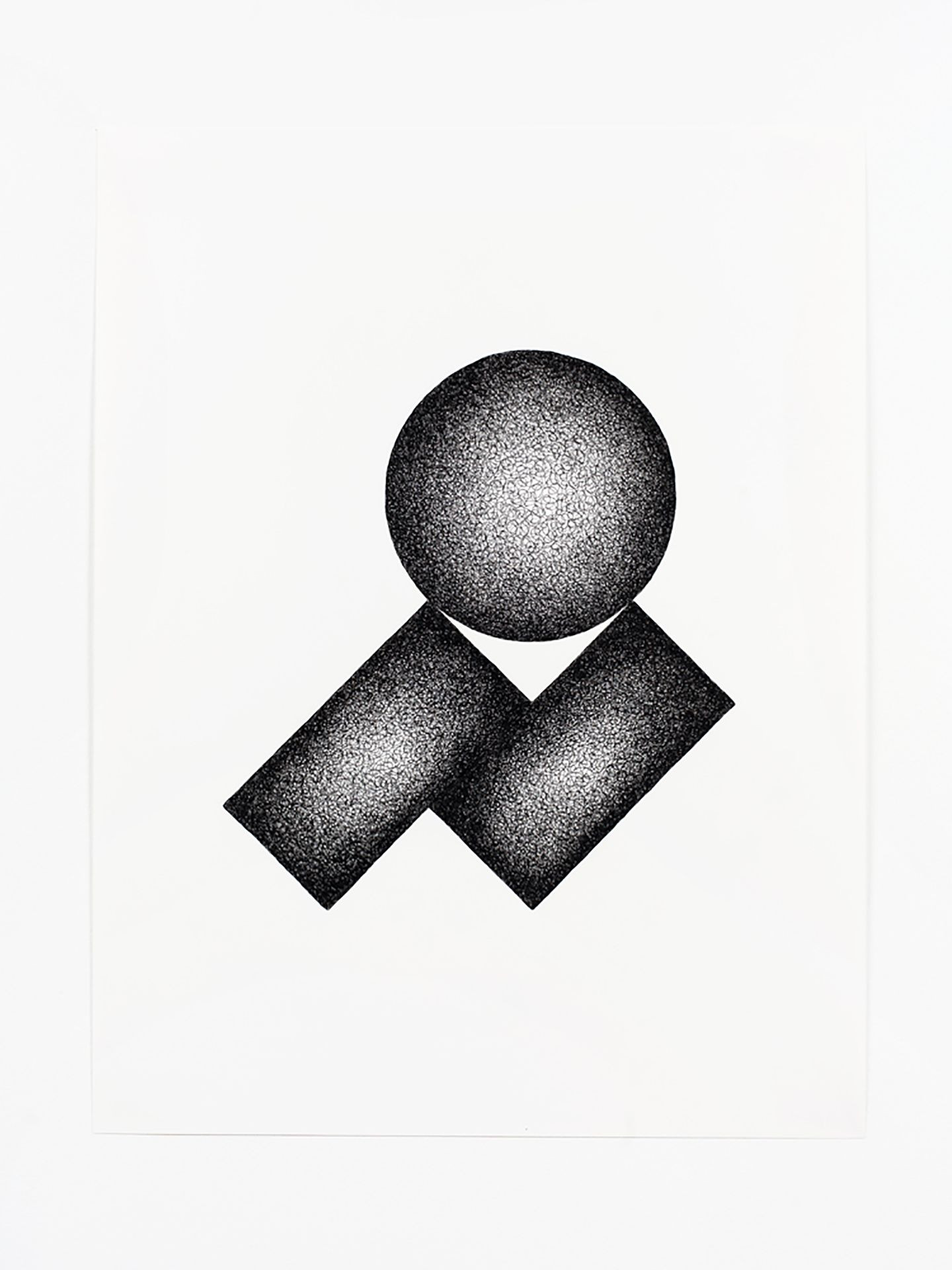
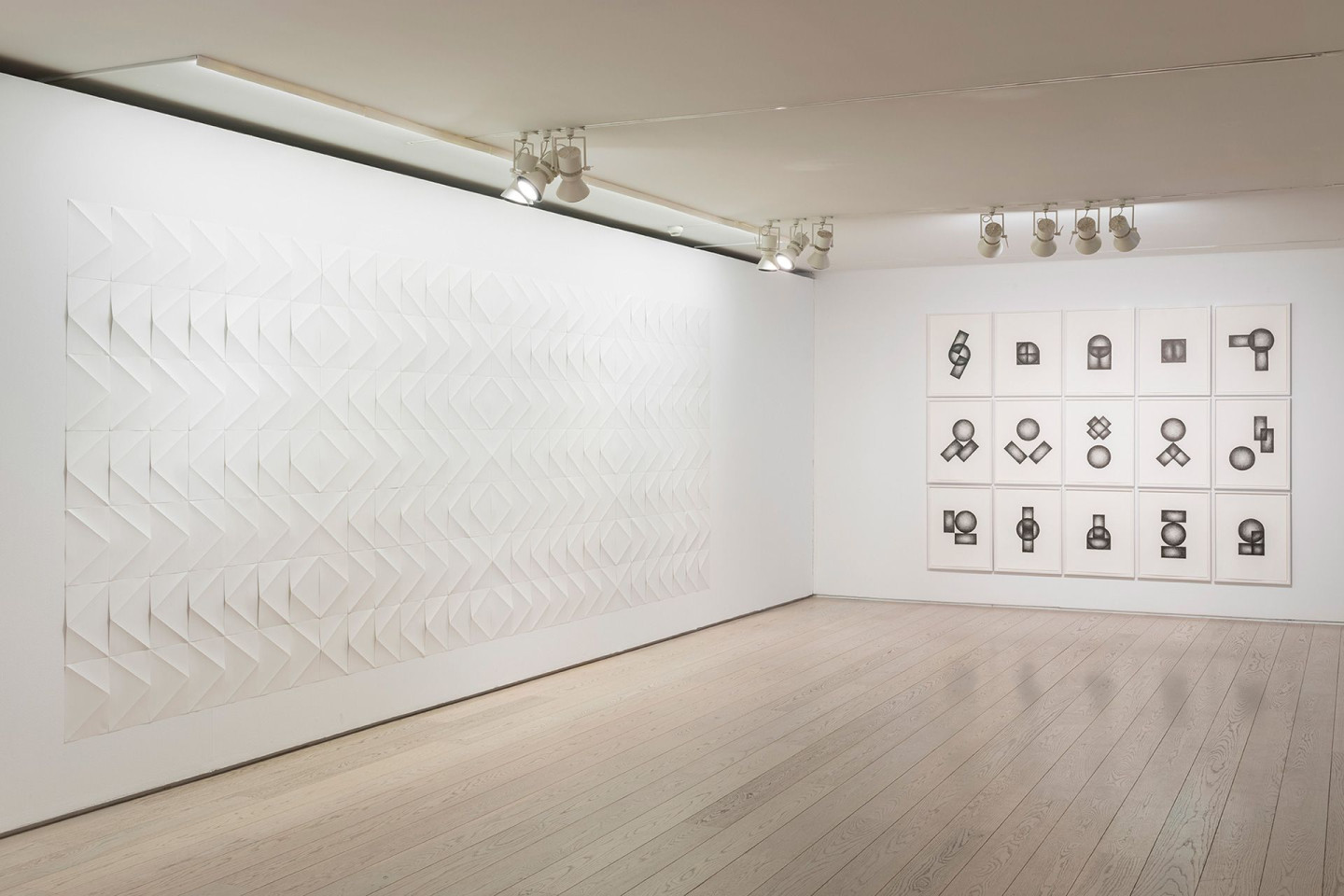
In this series of drawings, each of the fifteen sheets shows a different composition, made with two rectangles and a circle that maintain a close relationship between them: each circle has the same dimension as the sum of the two rectangles; or, in other words, the circle fits in the square space formed by the two rectangles. This geometrical equivalence provokes a kind of physical tension or attraction between the bodies that results in a typology of harmonious compositions.
As a whole, the grid of drawings has a strict order, in the style of a classical poem. Here are some examples of the rhymes that govern the internal relationships of the series:
- The four corner drawings, visually, also form corners and frame the whole.
- The drawing in the centre also forms a symbolic centre, with the X (x) serving as a metaphor for reflection. Moreover, it is the only drawing in which the equivalence between rectangles and circles in terms of size and visual weight is shown.
- In each of the three rows there are rhymes in the form of ABCBA, that is, there are two pairs of drawings mirrored in a central drawing.
- Between the three rows there is an ABA rhyme, with the first and third rows being the most compact and static, while the central row is the freest and most dynamic.
The set of compositions in this piece takes us back to the Bauhaus, where elementary geometric elements were used as a starting point to create alphabets, furniture, paintings or logos. In fact, this reductionism is still applied today in fields such as graphic design or concrete art.
Personally, I am attracted by the idea that a work of art can inspire abstract and liberating thought, while it can have a parallel life of its own as a bank logo or a supermarket bag. In my work I also tend to mix the banal with the sublime, and on occasions like this, a banal everyday gesture, the doodle, can become a monumental work of art.